Wednesday, 24 February 2016

Archive photo tagging and collage


Today's session focussed on tagging archive photos sourced from The Argus Archive, via The Keep, Brighton and Hove Royal Pavilion and Museums, QueenSpark Books, Brighton and Hove Photographic Collection (http://www.photosbrightonandhove.org.uk/) as well as beginning to research video material from Screen Archive South East.


In previous sessions we have been using Google sheets to create a shared document that provides all the data for the app. The app developers will use this to link photos, keywords, locations etc to the edited oral histories. Paul Farrington will also be using it to edit the sound files from the pupils selections - they have noted down the time-codes and provided a key "quote' that the will be used in the app. 


GIDDY GOOGLE SHEET DOCUMENT


For the final exhibition and website I'll be editing together a series of films linked to out themes combining different oral histories and archive film footage. The group will help make decisions about what oral histories to include and what video material to use. Today the group rotated around a series of tasks:

1. Looking at video footage from Screen Archive Southeast's material and making links between this material and our themes: Love and Romance, Friendship, Music and Dancing, Fashion and Identity, Pastimes. 

2.Collating the audio clips into groups related to the different themes.

3. Tagging the photos using the tag words already identified:


 LOVE                    WAR             MUSIC


LOSS            DANCING                IDENTITY


FASHION                 SUBCULTURES


MONEY                    CRIME                      MISCHIEF


BEACH                                 CINEMA       WORK


CHILDHOOD                       VENUES


PASTIMES               FRIENDSHIP


HOME


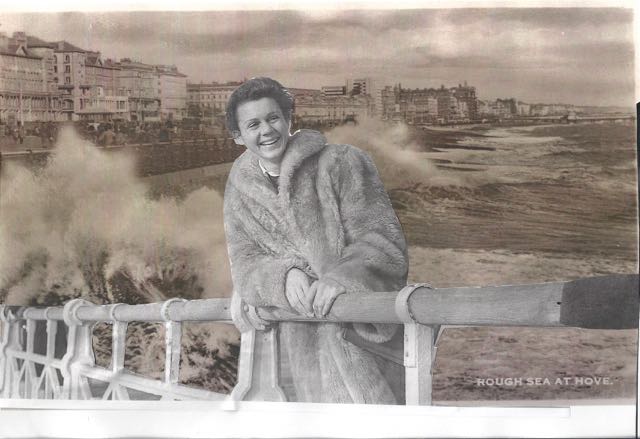
4. Making collages linked to the above tags using the archive photographs from The Brighton Museum, Argus Archive, and Queenspark Book community photo archive. We looked at the artist John Stezaker's work for inspiration, here are some examples of the pupils fantastic collages: 


Monday, 8 February 2016

Memory day at Larchwood Care Home


Today was the final memory day and took place at Larchwood Care home, Coldean, Brighton. We had a smaller group of students today as we knew it was likely we might only have a few participants and our approach might need more sensitivity as potentially we were meeting the eldest of our older participants. 


We met with the resident student occupational therapists whose role it was to visit the residents of the care home and invite them to participate. They were also able inform us about anything we might need to know about the participants and in some cases they would support the students in the interviews if they thought it was necessary.

Over the day we heard many lovely memories including stories about Brighton's first ever youth club, what went on in the love seats of the Regent Cinema, learning to dance at The Court school of dancing and tales of borrowing £5 to get married.  

Courtesy of Eileen Odom


Wednesday, 3 February 2016

Giddy Memory Day at Longhill School

Today we had our penultimate memory day at Longhill school. We had residents of Brighton, former students of Longhill as well as some Longhill staff members coming to share their memories.

More portraits of more fabulous Giddy characters to add to our collection


We heard stories of finding jiving at the Regent ballroom and one man recognised himself in a photo someone had brought to a previous memory day, that he's seen on Facebook. 


He told us how he met his future wive there and told us about the etiquette of dance halls in the 50's and what it felt like to approach someone to ask them to dance hoping you wouldn't be rejected!

We heard from a staff member who found first love at aged 13 in Preston Park only to have the romance disallowed by her parents. Over forty years later they were reunited when he emailed her out of the blue, they are still together!


Thursday, 21 January 2016

Memory Day 2 at The Keep


Today we had our second memory day at The Keep, Brighton. 


We had different stations set up for various activities three separate rooms and the pupils from Longhill did another brilliant job in rotating around various roles:


1. Being on the 'front desk' welcoming the older people and directing them to the right room.

2. Being on the 'welcome desk' talking them through the various consent forms they needed to sign.

3. Scanning images that people may have brought in.

4. Assisting photographer Elizabeth Doak in taking portraits.

5. Interviewing older people working with sound recordist Paul Farrington & Nimbus co-director Carina Westling.

6. Generally chatting with newcomers and helping with the essential cups of tea etc.


The pupils were give a hand out of questions related to the different themes to assist them during the interviews. These proved a useful prompt and help keep the interviews on point.

The pupils who had participated in the previous memory day noted that it felt easier second time round.


Giddy Questions handout:

Can you describe what Brighton was like for you as a teenager?
What made you happy/giddy as a teenager?
What's your favourite teenage memory?
What's your favourite teenage hobby/what did you do in your spare time?

Questions around particular themes:

Music and Dancing
Were you into music in your youth? Have you any stories around going to a particular dancehall/venue in Brighton?
Why was/was music important to you and your friends?
Did you have a favourite venue in Brighton?
Can you describe the club/dancehall in more detail  the atmosphere/what people were wearing, how did it feel to be there?

Friendship
Were friends important to you growing up as a teenager?
Have you got any funny/exciting/scary/giddy memories related to you and your friends?
What did you and your friends do on the weekend?
Did you and your friends ever get into trouble?

Love and Romance
Did you fall in Love in Brighton?
Have you any stories to share about love and romance in Brighton?
What was it like when you were a teenager if you liked someone romantically? Did you go on dates?
Was the cinema a place for love and romance?
What did you do to find love, how did you people people?

Fashion and identity
Was fashion important to you?
Were you part of any sub groups or gangs? - eg mods/rockers
Was how you looked an important part of your identity when you were a teenager?
What kind of things(in fashion/culture) influenced what you wore/how you acted/how you spent your spare time?


Beach and Seafront
Were the beach and seafront and important part of life for you as a growing teenager?
Did you spend time on the beach with your friends? - what kind of things did you do?
Were there any special events/activities that took place on the beach/seafront that you can remember?
Did you go to the beach at night?
What was beach-life like when you were a teenager?
· 
. 


The day was a very social one, once people had finished, scanning, having their portrait taken and being interviewed they stayed around to have a cup of tea and a chat. It was great to see people making connections and sharing their stories of brighton with each other. 

The Longhill pupils had fun making group portraits with Elizabeth. 


Some comments by pupils and a teacher from Longhill:

Today we're at the Keep interviewing people who were teenagers in the 40’s, 50’s and 60’s.   We’ve all loved listening to the wonderful stories told here by the people who have come from all around Brighton & Hove. - Pupil of Longhill

Students from Longhill School have been given jobs to do, which all involve interacting with the people who have come to visit. Many would agree these jobs have helped them become more confident and more willing to talk to new people.  Some have been involved with interviews, talking to the guests and asking them about their teenage life. Some have been at the front desk asking people to sign consent forms to use the footage of the interviews and pictures.  Others have helped take pictures for the website and the app, and some have been writing the blog. - Teacher, Longhill

Despite only being here a few hours so far, we as a group have met loads of incredible people with amazing stories. It is very interesting to hear what life was like in the 40s, 50s and 60s. Personally – my favourite difference between life now and back then, is that the police were very lenient. One story we heard was about a motorcyclist who drove down the seafront at around eighty miles per hour and the police stopped him. Instead of getting warnings, he was told off and sent on his way. - Pupil, Longhill.


Monday, 11 January 2016

Oral History editing

App designer Peter Pavement and I led the session together today to build on last week session.

They pupils continued to edit the interviews log time-codes as well as research images that connect to the different clips and begin to think about a possibly location that links to the story.

Meanwhile Peter worked with a pupil to create a google document that will log all the data that will be used in the app. What the pupils are beginning to learn is that the nitty gritty of organising and clearly linking all the material is a crucial part of the app design.

The pupils are recording and selecting/curating all the content for the app (through the interview recordings and image research) and must now start to log this material so it makes sense for the App design.

Key elements:

  • Name of interviewer
  • Photo of interviewee?
  • Biog of interviewee (if known)
  • Description of Clip: A best quote from the clip - to entice the user to listen.
  • Timecode
  • Image linked to clip.
  • Location

The material we have been researching and recording is all starting to link together and the best quotes from the clips are beginning to give a real sense of the range of stories emerging out of the process:


Thursday, 7 January 2016

Oral history editing

Back to Giddy this new year and the pupils got together to tell the rest of the group how the first memory day went and began to listen to and record a brief description of the clip as well as the time-codes of the best clips from the interviews they recorded. 


It was useful for the pupils to listen back to their interviews and give themselves some critical feedback:

Were they demonstrating the 'active listening' Rose talked about in the Oral History training?

Did they keep quiet enough - or find they laughed and hmmmed too much when the interviewee was talking? 

Could they have intervened/interrupted more when the interviewee was going off topic?

Did they notice things they missed or could have picked up and asked them to elaborate?

Are they drawing out interesting stories? 

Are they asking the right kind of questions to get the right kind of 'giddy' answers?

The pupils all did a fantastic job doing the interviews. It's not an easy thing to do at all. I think the pupils learnt a lot from listening back and I'm sure they next time they'll do an even better job.

What's most important is that they all can't wait to do it again!

Thursday, 17 December 2015

Memory day at Hop 50+ cafe, Hove

Today we ran our first memory day at the Hop 50+ cafe in Hove from 10-2pm. We had a steady stream of older people coming to share their stories of their giddy youth in Brighton.

The day started on BBC Sussex radio and an interview with Giddy's Nimbus Group's Co-director Carina Westling promoting the memory day. She read out a diary entry found during our research aof the Mass Observation Archive at The Keep.


Here's the radio interview with some images from our photographic research and first memory day:


We had different stations set up for various activities in the lounge next to the cafe as well as in two separate rooms and the pupils from Longhill did a fantastic job in rotating around various roles:

1. Being on the 'front desk' welcoming the older people and talking them through the various consent forms they needed to sign.
2. Scanning images that people may have brought in.
3. Assisting photographer Elizabeth Doak in taking portraits.
4. Interviewing older people working with sound recordist Paul Farrington.
5. Independently interviewing and recording oral histories.
6. Generally chatting with newcomers and helping with the essential cups of tea etc.


See below a selection of the photos taken on the day. Elizabeth was looking for expressions that somehow captured their different personalities and response to sharing their stories. The gentleman with his eyes closed said he found the experience of sharing his stories quite an emotional one. We selected different backgrounds using material from 40's/50's and 60's and changed these from time to time. These images may end up as part of the exhibition and perhaps on the App itself.


Pupils working with Elizabeth to take portraits


Photos brought in by participant of the Memory day

Caricature drawn by Ben Ware, brought in by his daughter who also took part in recording her own oral history. 


Dance hall in Brighton brought Photos brought in by participant of the Memory day